
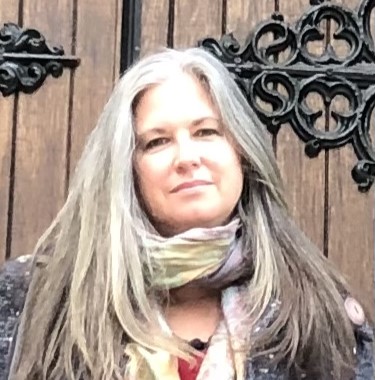
DR. Lisa M. Simeone, founding member
What is most interesting or unique about your research?
As an ethnographer, I pay attention to how people create worlds in relation to one another. This entails an interest in how we interact and enact our everyday lives, as well as the embodied language – discursive and gestural – with which we share our impressions, formulate our ideas, and tell our stories. As a participant in these activities and practices, I can’t assume that I occupy a standpoint external to what I observe. Though a.rigorous attempt at objectivity is important, an anthropologist must also situate her inquiry within an historical and ideological context that saturates her perspective. In this regard, my research is an interpretive exercise that seeks to illuminate features of our shared existence in a way that honors the mystery of others, accepting the limitations of my own knowledge.
What do you value most about being part of GHRAD?
When we were in Burundi, we were told that, “When you have ubuntu, you love one another. You cooperate and share what you know with others to make the community move.” Our work in Africa and in the US follows this guidance. We collaborate with sensitivity to one another’s strengths and rhythms of work, as we manage the psychic toll of genocide research. Working together, we grow individually and as a collective. It’s an honor to be part of such an extraordinary group of colleagues.
What originally drew you to your field of study?
As an activist and a scholar, I’ve been interested in the political and legal, economic and environmental dimensions of human mobility, considered as an complex socio-material system. As a child, I lived in highland Guatamala during a clandestine civil war that would later be called a genocide. My mother was an anthropologist who studied demographic change; my father was an historian preoccupied with the impact of racism on education. I’ve studied literature, philosophy, history and the social sciences, but I’ve never sidelined problems of justice and equity. It just doesn’t seem possible to live in our world without trying to make it better.