
Dr. Jeanine Ntihirageza, Founding Director
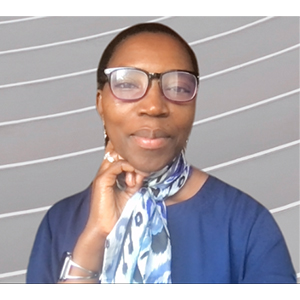
What do you value most about being part of GHRAD?
What I value most is the space GHRAD creates for difficult conversations that lead to genuine transformation. As the founding director, I envisioned GHRAD as more than an academic research center. It's a community where survivors, scholars, students, and advocates come together to bear witness, to learn, and to imagine pathways toward healing and prevention. I deeply value our commitment to mentoring the next generation of scholars and activists, particularly students from affected communities who see themselves reflected in this work. GHRAD allows me to practice what I call "actionable empathy", moving beyond scholarly analysis to create real-world impact through education, advocacy, and partnership with communities that have experienced trauma and displacement.
What is most interesting or unique about your research?
What makes my research unique is that I bring together three dimensions that are rarely combined: I am a survivor of the 1972 Burundi genocide, a trained linguist, and a scholar committed to centering African epistemologies in genocide studies. This positioning allows me to bridge the deeply personal and the rigorously academic. I'm particularly interested in how language shapes memory and silencing, i.e., how atrocities are erased not just through physical destruction but through linguistic and narrative erasure. My work on Ubuntu philosophy offers an alternative framework for understanding justice, healing, and reconciliation that emerges from African thought rather than Western models. Perhaps most importantly, I'm committed to ensuring that survivors' voices, especially those from the African continent whose stories have been systematically silenced, become central to how we understand and prevent mass atrocities.
What originally drew you to your field of study?
I initially came to linguistics because I loved language—the structure, the beauty, the logic of how languages work. But my path took a profound turn when I realized that my academic training could help me understand and articulate something much more urgent: the genocide I survived as a child in Burundi in 1972. For decades, that genocide was silenced, denied, and erased from official narratives. I found myself drawn to genocide studies because I needed to understand what happened to my family, my community, my country, and why the world remained silent. My linguistic training gave me tools to analyze how language is weaponized during genocide and how silence itself becomes a form of violence. What began as a personal necessity evolved into a scholarly mission: to ensure that silenced
genocides are documented, that survivors are heard, and that African experiences of mass atrocity receive the same attention and rigor as other genocides. My current field of study chose me as much as I chose it.