
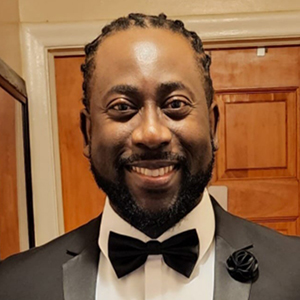
Dr. Jermaine Mccalpin, founding member
What is most interesting or unique about your research?
My research is situated within the interdisciplinary field of transitional justice, which interrogates how societies emerging from conflict confront and attempt to redress historical wrongs. At its core, transitional justice engages the normative and practical question of how communities reckon with legacies of violence in ways that foster accountability, reconciliation, and the reconstitution of social trust. Within this domain, my work concentrates on two principal mechanisms—truth commissions and reparations—as instruments for addressing the aftermath of mass atrocities. What distinguishes my research is its comparative orientation: I examine these mechanisms across both African and American contexts, with primary case studies in Burundi, Namibia, and the genocides of Indigenous peoples in the Americas. By juxtaposing these geographies, I seek to illuminate both the convergences and divergences in how societies conceptualize justice, thereby contributing to a more global theorization of transitional justice and its capacity to confront the enduring consequences of genocide.
What do you value most about being part of GHRAD?
The most salient value of participating in GHRAD is the collegiality and intellectual reciprocity fostered within this scholarly community. GHRAD convenes researchers from a wide spectrum of disciplines—including linguistics, ethnic studies, psychology, computer science, political science, social work, international relations, and literature—whose collective expertise enriches the study of human rights and justice. This interdisciplinary constellation not only broadens the analytical horizons available to individual scholars but also cultivates a collaborative ethos in which complex questions can be interrogated with methodological and theoretical nuance. For me, the significance of GHRAD resides in its capacity to generate a dynamic intellectual exchange, where disciplinary boundaries are traversed in pursuit of deeper insights into justice, reconciliation, and human dignity.
What originally drew you to your field of study?
My intellectual engagement with transitional justice was catalyzed in 1999, shortly after the South African Truth and Reconciliation Commission issued its seven-volume final report. I undertook a graduate seminar devoted exclusively to interrogating the Commission’s findings, methodologies, and normative implications. That encounter proved formative: it revealed the constitutive role of truth-telling in reshaping collective memory, reorienting moral horizons, and enabling political transformation in the wake of atrocity.
Subsequently, my research trajectory broadened to examine truth commissions across the Global South, including South Africa, Sierra Leone, Chile, Argentina, Grenada, and Haiti. I became especially interested in the comparative contours of these processes—their institutional design, evidentiary practices, and reparative frameworks—and how they mediate tensions between justice, forgiveness, and social repair. This work foregrounded the limits and possibilities of commissions as sites where competing narratives, legal reasoning, and ethical claims are adjudicated.